Planning a trip to Namibia? Since April 1, 2025, the Namibian government has introduced new visa requirements that affect travellers from over 33 countries – including the United States, United Kingdom, Canada, Australia, and most European nations. This comprehensive guide covers every detail of the Namibia eVisa system, from eligibility and costs to the step-by-step application process, required documents, entry points, and frequently asked questions.
What Changed on April 1, 2025?
Before April 2025, citizens of 33 countries – including the US, UK, Canada, Australia, and many EU states – could enter Namibia visa-free for up to 90 days. That changed when the Namibian government abolished visa-free entry for these nationalities, citing a lack of reciprocal visa agreements with their home countries.
The new system introduced a Visa on Arrival (VoA) scheme, which can be obtained either:
- Online in advance as an e-Visa (recommended), or
- At the port of entry upon arrival in Namibia
The Namibian authorities strongly recommend applying for the e-Visa online before travelling to avoid delays and complications at immigration.
Who Needs a Namibia eVisa?
Countries That Do NOT Need a Visa
Citizens of the following countries can still enter Namibia without a visa for up to 90 days:
Angola, Botswana, Brazil, Cuba, Eswatini, Hong Kong (SAR), Indonesia, Jamaica, Kenya, Lesotho, Macau (SAR), Malawi, Malaysia, Mauritius, Mozambique, Russian Federation, Seychelles, Singapore, South Africa, Tanzania, Zambia, and Zimbabwe.
Countries Eligible for Visa on Arrival / eVisa
Nationals of the following countries must now obtain a Visa on Arrival (either online or at the border):
African countries: Benin, Burkina Faso, Burundi, Cabo Verde, Cameroon, Central African Republic, Chad, Comoros, Côte d’Ivoire, Djibouti, Equatorial Guinea, Eritrea, Gabon, Gambia, Ghana, Guinea, Guinea-Bissau, Liberia, Madagascar, Mauritania, Niger, Rwanda, São Tomé and Príncipe, Sierra Leone, Togo, Tunisia, Uganda, Western Sahara Republic.
Non-African countries: Argentina, Armenia, Australia, Austria, Azerbaijan, Belarus, Belgium, Bulgaria, Cambodia, Canada, Chile, Croatia, Czech Republic, Denmark, Ecuador, Estonia, Finland, France, Germany, Greece, Hungary, Iceland, Ireland, Israel, Italy, Kazakhstan, Kyrgyzstan, Latvia, Liechtenstein, Lithuania, Luxembourg, Mexico, Moldova, Netherlands, New Zealand, Nicaragua, Norway, Paraguay, Peru, Poland, Portugal, Romania, Singapore, Slovakia, South Korea, Spain, Sweden, Switzerland, Tajikistan, Thailand, Turkey, Turkmenistan, Ukraine, United Arab Emirates, United Kingdom, United States of America, Uruguay, Uzbekistan, Vatican/Holy See, Venezuela, Vietnam.
If your country is not on either list, you may need to apply for a traditional visa through a Namibian embassy or high commission.
Namibia eVisa Types and Costs
Visa on Arrival (Tourism/Visitor)
This is the standard visa for tourists, family visits, and short business trips. It is a multiple-entry visa valid for up to 90 days.
| Category | African Union Countries | Non-African Union Countries |
|---|---|---|
| Adults (12+ years) | NAD 1,200 (~€60) | NAD 1,600 (~€82) |
| Children (6-11 years) | NAD 600 (~€30) | NAD 800 (~€41) |
| Children under 6 | Free | Free |
Plus a 3% service fee on all online transactions.
Cruise Ship Passengers
Passengers arriving at Walvis Bay or Lüderitz harbours by cruise ship pay a reduced day-visit fee of NAD 300 (approximately €15).
Other Visa Categories
If you plan to work, volunteer, study, or stay longer than 90 days, you cannot use the Visa on Arrival system. You must apply through a Namibian embassy or high commission in your country of residence before travelling.
How to Apply for a Namibia eVisa Online: Step-by-Step
Step 1: Visit the Official Portal
Go to the Ministry of Home Affairs, Immigration, Safety and Security (MHAISS) website:
https://eservices.mhaiss.gov.na/visaonarrival
Step 2: Create an Account
Register an account using your email address. You will need to verify your email before proceeding.
Step 3: Start Your Application
Select “Visa on Arrival” (not “Holiday Visa”) and fill in the application form. You will have approximately 30 minutes to complete each submission. If the session times out, you will need to start again.
Pro tip: Have all your documents ready before you begin. You cannot copy/paste into the “Places to Be Visited” field – you must type information manually.
Step 4: Provide Personal and Travel Details
The form requires:
- Full personal details (name, date of birth, nationality, passport number)
- Travel dates and itinerary
- Places to Be Visited: Enter your first accommodation, all planned destinations, and your last place of stay. For example:
- First place: Safari Lodge, Windhoek
- Destinations: Sossusvlei, Swakopmund, Etosha National Park
- Last place: Hotel in Windhoek
- For visiting family/friends: one full contact address and phone number is sufficient
Step 5: Upload Required Documents
You will need to upload:
- Passport scan – PDF format, maximum 2 MB
- Passport photo – maximum 300 KB
Step 6: Pay the Visa Fee
Payment is made online via credit or debit card. The 3% service fee is added to the total. Group bulk payments are now available for tour operators, enabling payments up to NAD 97,000.
Step 7: Receive Your eVisa
Once your application and payment are processed, the e-Visa is issued immediately. Download and print the e-Visa – you must present a hard copy at immigration.
Applying for Family Members
Once you have registered an account, you can submit applications for family members from the same account. Each family member needs a separate application form, but they do not need to create their own accounts.
What Documents Do You Need at the Namibian Border?
When you arrive in Namibia, be prepared to present the following to immigration officials:
- Printed e-Visa – you must sign it in front of the immigration officer
- Valid passport – at least 6 months validity beyond your stay, with at least 3 blank pages
- Return ticket or proof of onward travel
- Accommodation confirmation(s) or invitation letter
- Proof of sufficient funds – booking confirmations plus a credit/debit card (a recent bank statement is also accepted)
- Travel/medical insurance – must be in English
- For children: full birth certificate or parental consent letter
Entry Points for eVisa Holders
Your e-Visa is accepted at a wide range of entry points across Namibia:
Airports
- Windhoek Hosea Kutako International Airport (main international gateway)
- Walvis Bay Airport
- Eros Airport (Windhoek)
- Ondangwa Airport
- Oranjemund Airport
- Gobabis Airport
- Grootfontein Airport
- Keetmanshoop Airport
- Lüderitz Airport
- Mpacha Airport
- Rundu Airport
- Singalamwe Airport
Seaports
- Lüderitz Port
- Walvis Bay Port
Land Border Posts
- Ariamsvlei (South Africa)
- Impalila Island (Zambia/Botswana)
- Omahenene (Angola)
- Oranjemund (South Africa)
- Oshikango (Angola)
- Kasika (Zambia)
- Katima Mulilo (Zambia)
- Katwitwi (Angola)
- Klein Manasse (South Africa)
- Mata-Mata (Botswana)
- Mohembo (Botswana)
- Ngoma (Botswana)
- Nkurenkuru (Angola)
- Noordoewer (South Africa)
- Rucana (Angola)
- Sarasungu (Angola)
- Sendelingsdrift (South Africa)
- Trans-Kalahari (Botswana)
- Velloorsdrift (South Africa)
Important Tips for a Smooth Arrival
- Check your admission stamp before leaving the immigration counter. Ensure the date and length of stay are correct. Overstaying or having an incorrect/missing stamp can result in detention, arrest, and fines.
- The e-Visa is multiple-entry by default – you can leave Namibia (for example, to visit Victoria Falls in Zimbabwe) and re-enter on the same visa.
- Print your e-Visa – digital copies on your phone are not accepted. You need a hard copy.
- Arrival forms: If you hold a new-format e-Visa that states it serves as an arrival form, you do not need to complete a separate arrival card. Older e-Visa versions may still require one.
- 30-minute timeout: The online application form has a session limit. Prepare all documents and information in advance to avoid starting over.
How Long Can You Stay in Namibia?
The Visa on Arrival is valid for up to 90 days in a calendar year from the date of issue. If you need more time, you can request an extension upon arrival by presenting the required documents to immigration officials, or apply through the Ministry of Home Affairs in Windhoek.
Travelling with Children: Special Requirements
Namibia has strict requirements for minors (children aged 17 and under):
- Each child must have their own valid passport
- Parents must carry full unabridged birth certificates (originals or certified copies) showing both parents’ details
- If one parent is travelling alone with a child: notarised consent from the other parent, plus the birth certificate
- Legal guardians must carry documentation proving guardianship
- Unaccompanied children need: passport, parental consent affidavit, and a letter from their host with the accommodation address
Note: Abridged (short) birth certificates are not accepted by Namibian immigration.
Yellow Fever Vaccination Requirement
If you are arriving from a country with a risk of yellow fever transmission, you must present a valid yellow fever vaccination certificate upon entry to Namibia.
Frequently Asked Questions
Is the Namibia eVisa the same as a holiday visa?
No. The Visa on Arrival and the Holiday Visa are different categories. For tourism, family visits, and short business trips, apply for the Visa on Arrival. The Holiday Visa is a separate category available on the MHAISS portal.
Can I work in Namibia with a Visa on Arrival?
No. The Visa on Arrival is for tourism, visiting family/friends, and business visitor activities only. For employment, volunteering, or study, you must obtain the appropriate visa from a Namibian embassy before travelling.
How long does eVisa processing take?
The e-Visa is typically issued immediately after successful application and payment. However, the Namibian authorities recommend applying at least 2 weeks before travel to account for any technical issues.
What if my eVisa application times out?
The form has a 30-minute session limit. If it times out, you will need to start again. Having your documents and travel details prepared in advance will help you complete the form within the time limit.
Can I apply for multiple people at once?
You can submit applications for multiple people from a single registered account. However, each person needs a separate application form. Group bulk payments are available for tour operators.
Do I need to print my eVisa?
Yes. A printed hard copy of your e-Visa is required. Digital copies on phones or tablets are not accepted at immigration.
What counts as proof of sufficient funds?
Booking confirmations for accommodation plus a credit or debit card are considered sufficient. A recent bank statement is also accepted.
What is the difference between visa validity and length of stay?
Your visa validity is the window during which you can enter Namibia. Your length of stay is how long you are permitted to remain in the country. These are different – always check your admission stamp at immigration.
Key Contacts and Resources
- MHAISS e-Visa Portal: https://eservices.mhaiss.gov.na/visaonarrival
- Namibian Embassy in Washington D.C.: https://namibiaembassyusa.org
- U.S. Embassy in Namibia: [email protected] | +264 61 202 5000
- UK Government Namibia Travel Advice: https://www.gov.uk/foreign-travel-advice/namibia
- Namibia Tourism Board: https://visitnamibia.com.na
Final Checklist Before Your Trip
- Check if your nationality requires a visa on the MHAISS portal
- Apply for your e-Visa at least 2 weeks before departure
- Ensure your passport has 6+ months validity and 3+ blank pages
- Print your approved e-Visa
- Book accommodation and keep confirmation documents
- Arrange travel/medical insurance in English
- If travelling with children, prepare unabridged birth certificates and consent letters
- Check yellow fever vaccination requirements based on your travel history
- Save the MHAISS portal URL and key embassy contacts on your phone
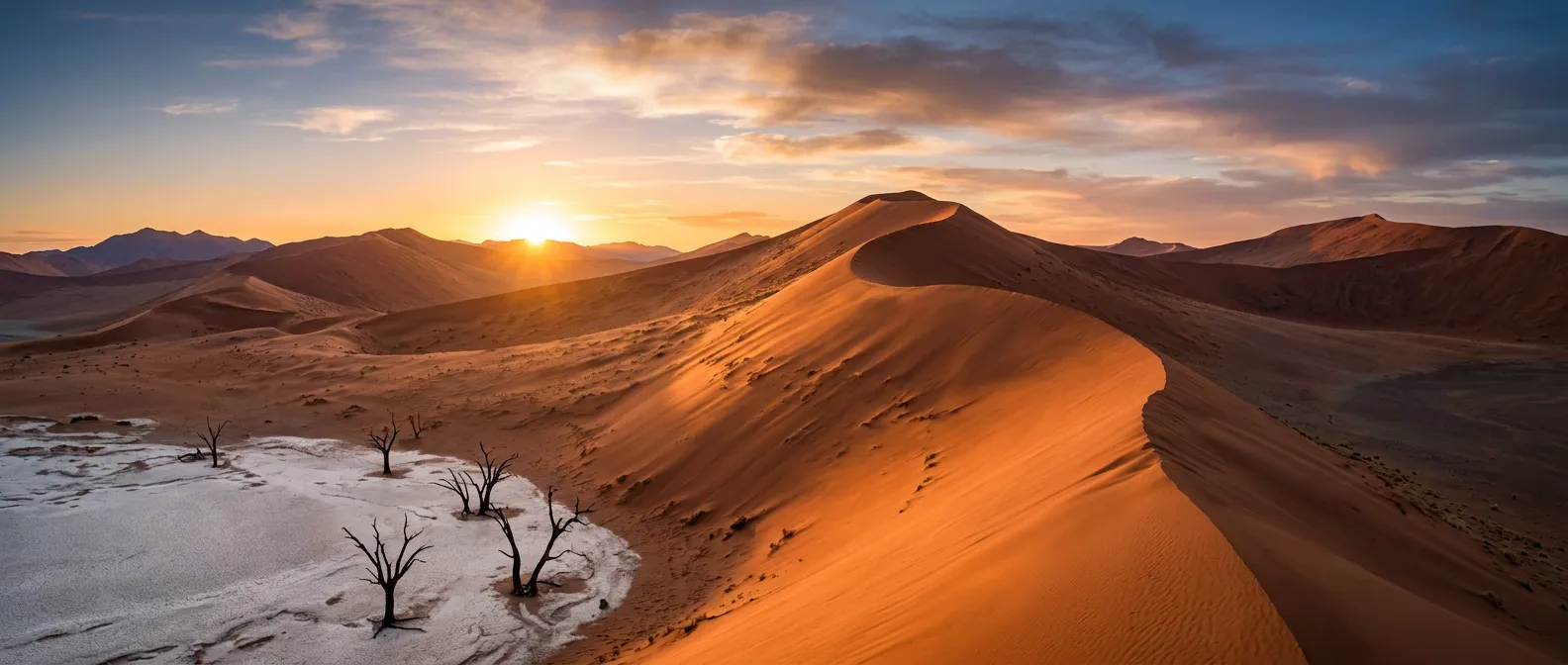
Namibia is one of Africa’s most spectacular destinations – from the towering dunes of Sossusvlei to the wildlife of Etosha and the Skeleton Coast. With your e-Visa sorted in advance, you can focus on enjoying the adventure. Safe travels!
Namibia eVisa vs. Traditional Embassy Visa: Which Should You Choose?
For most tourists and short-term visitors, the e-Visa (Visa on Arrival) is the fastest and most convenient option. It can be completed entirely online, costs less than embassy-processed visas, and is typically issued immediately. The traditional embassy visa route is necessary only for work permits, study permits, volunteer visas, and other non-tourism categories. If you are simply visiting Namibia for a holiday, safari, or to see friends and family, the e-Visa is the clear choice. Applying online at least two weeks before your departure ensures you have your printed approval in hand well before your flight.